
Description
Product Overview
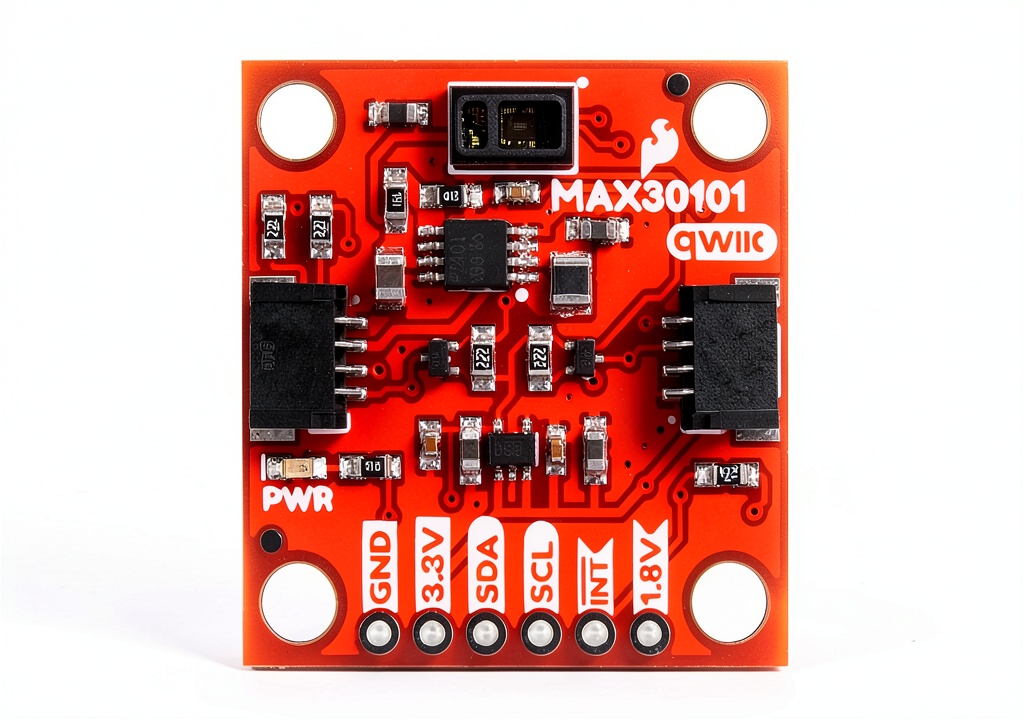
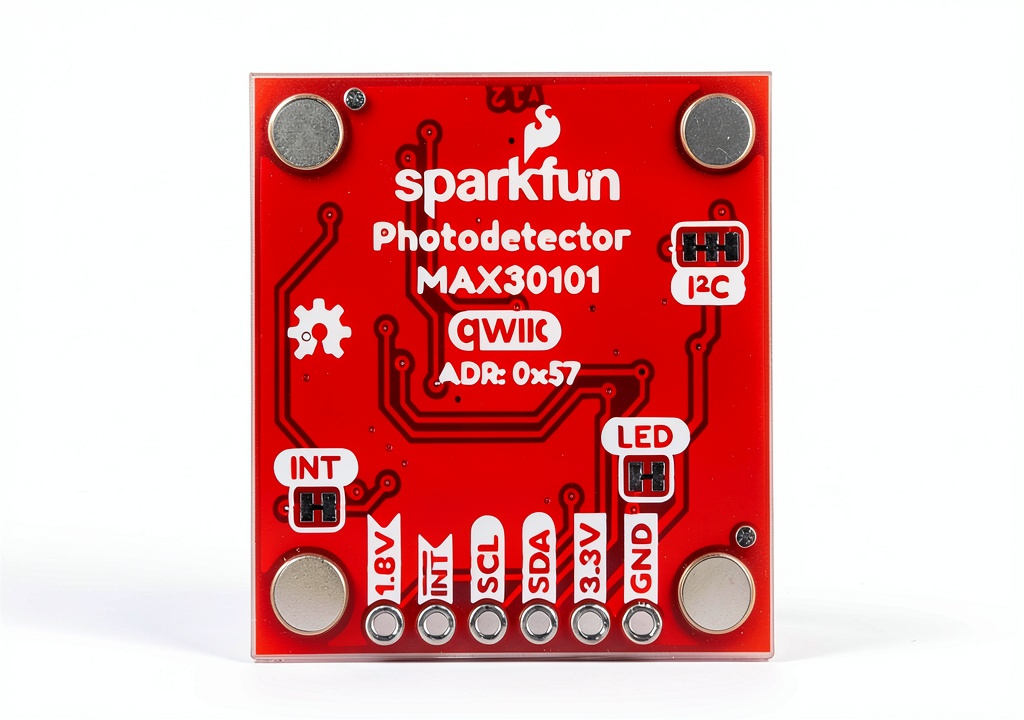
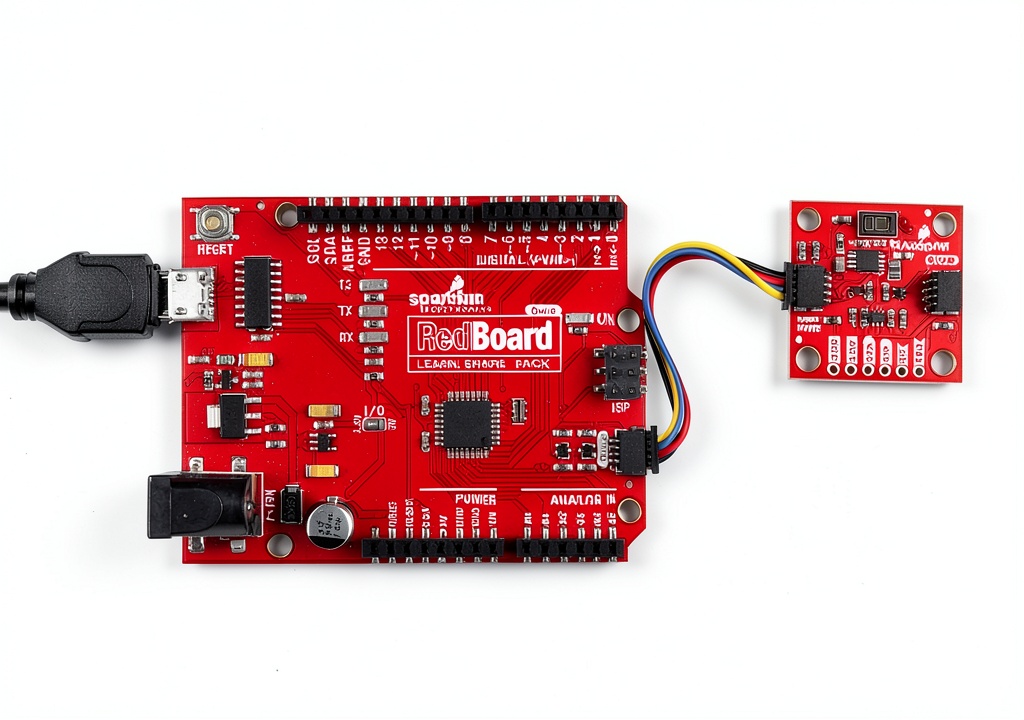
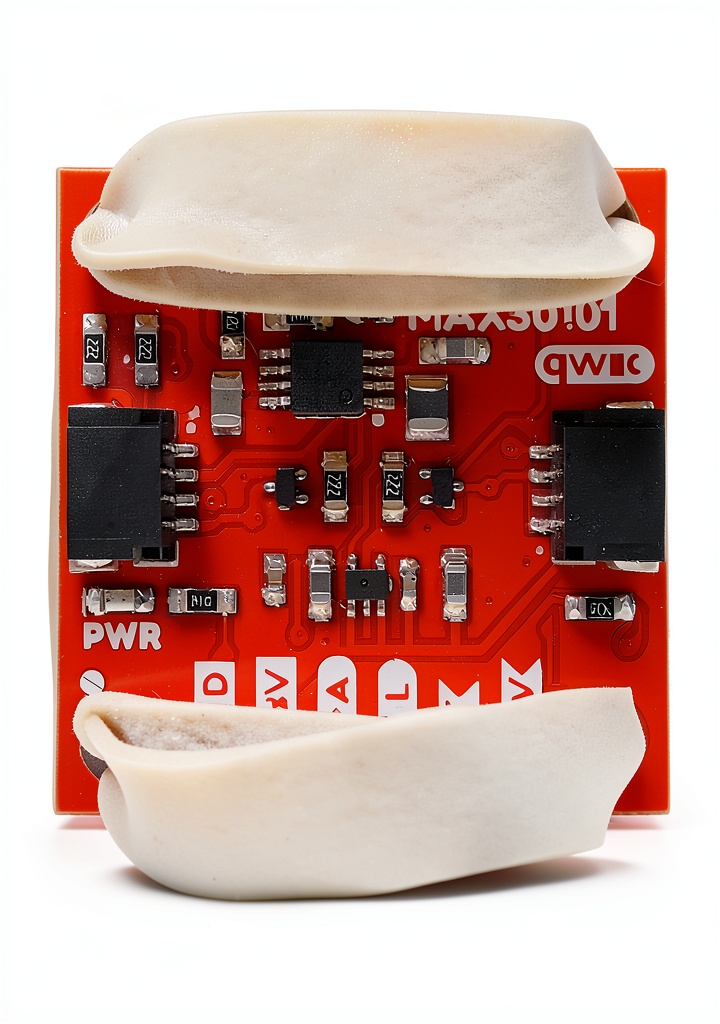
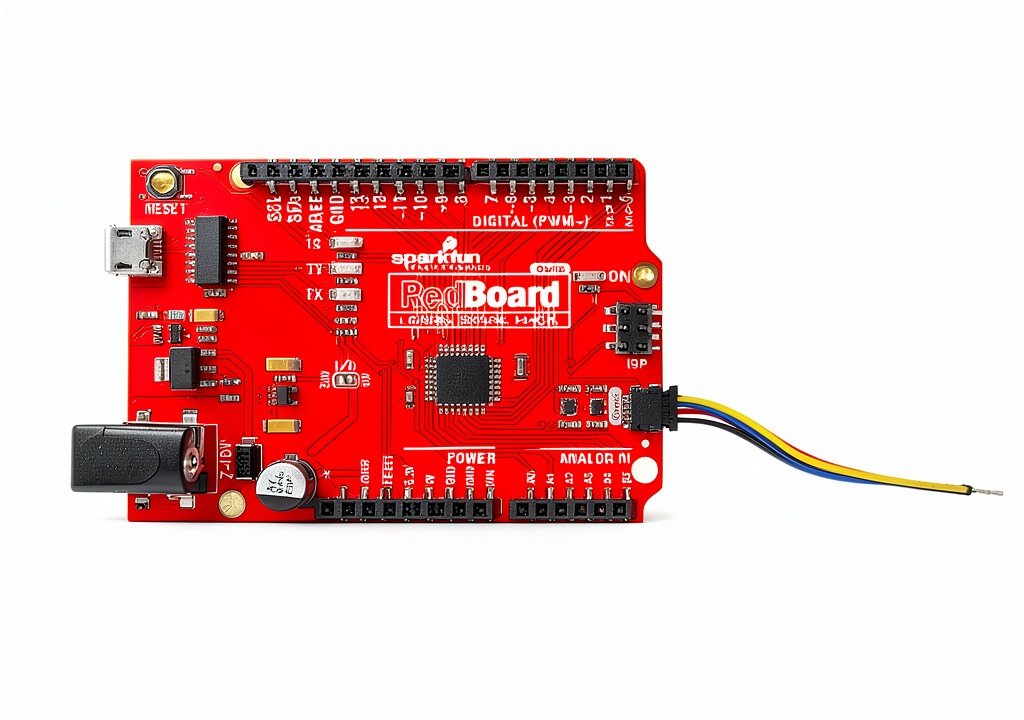
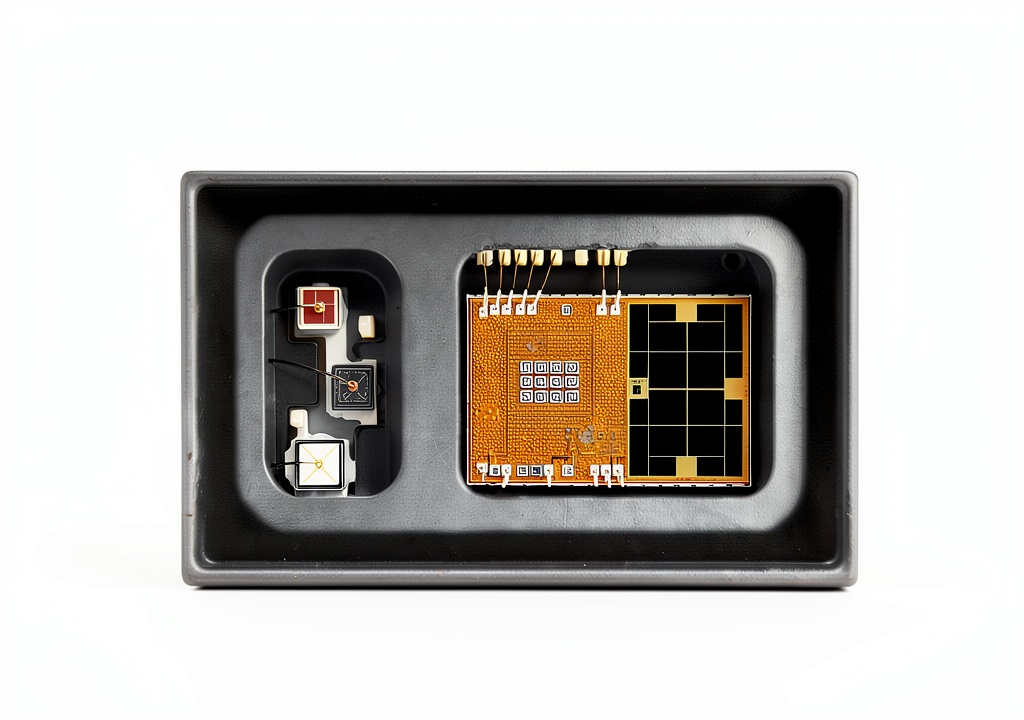
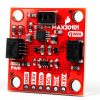
The SparkFun MAX30101 photodetector breakout is engineered for developers who need a tiny yet powerful optical sensing platform. Measuring just 1″×1″ (2.54 cm × 2.54 cm), the board fits comfortably on any prototype or final product without sacrificing functionality. It features a Qwiic connector system that eliminates the need for soldered wires, allowing rapid integration with any Qwiic‑compatible microcontroller or development board. Inside the module, the MAX30101 sensor combines three high‑intensity LEDs—red, infrared, and green—with a built‑in photodetector, enabling simultaneous measurement of multiple wavelengths. This multi‑color capability supports a range of applications from smoke particle detection to photoplethysmography (PPG) for heart‑rate monitoring.
The sensor’s analog‑to‑digital converter operates at 18‑bit resolution, providing fine‑grained data that can be sampled at up to 3,200 samples per second. A 32‑element FIFO buffer ensures that no data is lost during high‑speed acquisition, while the integrated temperature sensor (±0.0625 °C resolution) allows for temperature‑compensated readings, improving accuracy in varying environments. Power consumption is minimized through an ultra‑low‑power mode, making the breakout ideal for battery‑powered wearables and remote sensing stations. The board also includes an onboard 1.8 V regulator and a 5 V step‑up DC/DC converter, guaranteeing stable operation across a wide range of supply voltages.
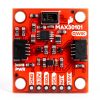
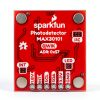
Crafted from a durable glass‑encapsulated package, the sensor is protected against dust and moisture, extending its lifespan in harsh industrial settings. The breakout’s six pins expose all necessary I²C signals, PWM control for each LED channel, and a dedicated interrupt line, giving developers full control over timing, illumination intensity, and data flow. With a robust mechanical design that includes four 0.13″ mounting holes compatible with M3 screws, the module can be securely attached to enclosures, PCBs, or custom housings. SparkFun’s reputation for quality assurance ensures that each unit undergoes rigorous testing before shipment, providing confidence that the sensor will perform reliably in critical applications.
![[Product front view showing all components]](https://www.deliciousco.store/wp-content/uploads/2026/07/964b5ca8d12343fda1ec99ac63e24974.jpg)
Usage
Designed for versatility, the MAX30101 breakout excels in a variety of real‑world scenarios. In environmental monitoring, the combined red, IR, and green LEDs can detect particulate matter such as smoke or dust, enabling early warning systems for fire safety or air‑quality assessment. The high‑resolution ADC captures subtle changes in light scattering, allowing algorithms to differentiate between smoke types and ambient dust. For health‑tech applications, the same sensor can be used to monitor blood oxygen saturation (SpO₂) and heart rate by analyzing the absorption of red and infrared light through capillary tissue. The integrated temperature sensor further refines these measurements by compensating for thermal drift, which is critical for accurate biomedical readings.
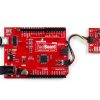
Because the breakout operates over I²C, it can be paired with popular development platforms such as Arduino, Raspberry Pi, or ESP32, making it accessible to hobbyists and professionals alike. Its low‑power mode extends battery life in wearable devices, enabling continuous monitoring for days or weeks without frequent recharging. The PWM control of each LED channel allows developers to fine‑tune illumination intensity, reducing power consumption while maintaining signal quality. In industrial automation, the sensor can be mounted on conveyor belts to detect product presence or material composition based on optical signatures, supporting quality‑control processes.
The board’s compact size and mounting holes make it easy to integrate into custom enclosures, handheld devices, or wearable patches. Whether you are building a prototype for a research project, a proof‑of‑concept for a startup, or a production‑grade IoT sensor, the MAX30101 breakout provides the flexibility and performance needed to meet demanding specifications.
Why Choose Us
When selecting a photodetector solution, reliability, support, and ecosystem matter as much as raw specifications. SparkFun’s commitment to quality means each MAX30101 breakout undergoes comprehensive functional testing, ensuring that the sensor’s ADC, temperature compensation, and LED drivers meet or exceed the manufacturer’s datasheet values. Our engineering team provides detailed documentation, reference code, and example projects that accelerate development time, allowing you to focus on application logic rather than low‑level driver integration.
Beyond the hardware, SparkFun offers responsive technical support through forums, email, and live chat, helping you troubleshoot integration challenges quickly. We also maintain an extensive library of open‑source software libraries compatible with Arduino, CircuitPython, and other platforms, simplifying the process of reading sensor data, configuring PWM channels, and handling FIFO buffers. Our community of makers and professionals contributes additional examples, fostering a collaborative environment where solutions are shared and refined.
Choosing SparkFun means you benefit from a supply chain that prioritizes consistent availability and transparent pricing. Our products are stocked in multiple warehouses worldwide, reducing lead times for both small‑batch prototypes and large‑scale production runs. With a clear focus on ethical manufacturing and environmental responsibility, SparkFun ensures that each component is produced with minimal waste and adherence to industry standards.
Key Features
- Compact 1″×1″ Qwiic board simplifies integration and saves valuable space in tight designs.
- Three built‑in LEDs (red, IR, green) enable multi‑wavelength sensing for smoke detection and health monitoring.
- 18‑bit ADC with 32‑sample FIFO delivers high‑resolution data at up to 3,200 sps for precise analysis.
- Integrated temperature sensor provides real‑time thermal compensation, improving measurement accuracy.
- Low‑power operation and PWM control extend battery life while allowing fine‑tuned illumination.
- Onboard 1.8 V regulator and 5 V step‑up converter ensure stable performance across supply ranges.
- Robust glass‑encapsulated package protects against dust and moisture for reliable field use.
- Dedicated technical support and extensive open‑source libraries accelerate development and reduce time‑to‑market.
FAQ
What types of applications can benefit from the MAX30101 breakout?
The sensor is suitable for smoke and particulate detection, proximity sensing, heart‑rate and SpO₂ monitoring, industrial material identification, and any application requiring precise optical measurements.
How does the low‑power mode affect sensor performance?
Low‑power mode reduces LED drive current and ADC sampling frequency, extending battery life while still providing sufficient data for most monitoring tasks. Users can adjust PWM settings to balance power consumption and signal quality.
Is the breakout compatible with 3.3 V and 5 V systems?
Yes. The board includes an onboard 1.8 V regulator for the sensor and a 5 V step‑up converter, allowing it to operate safely from both 3.3 V and 5 V host systems.
Can I access individual LED channels for custom illumination patterns?
Absolutely. The MAX30101 provides PWM control for each LED channel, enabling developers to set specific pulse widths and amplitudes to tailor illumination to their application needs.
What support resources are available for integrating this sensor?
SparkFun offers comprehensive datasheets, wiring diagrams, example code for Arduino and Python, and an active community forum where you can ask questions and share projects.
Reviews
There are no reviews yet.