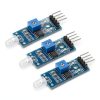
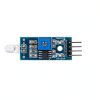

Description
Product Overview
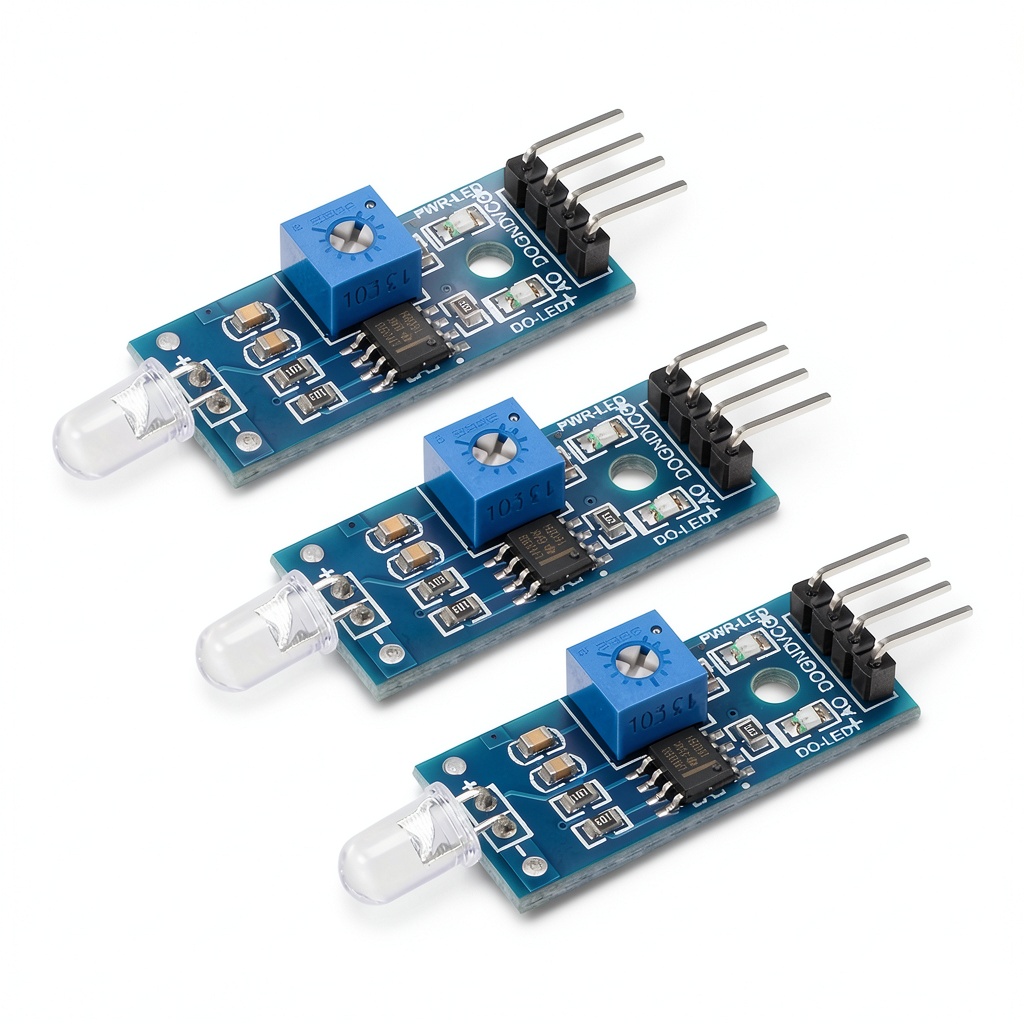
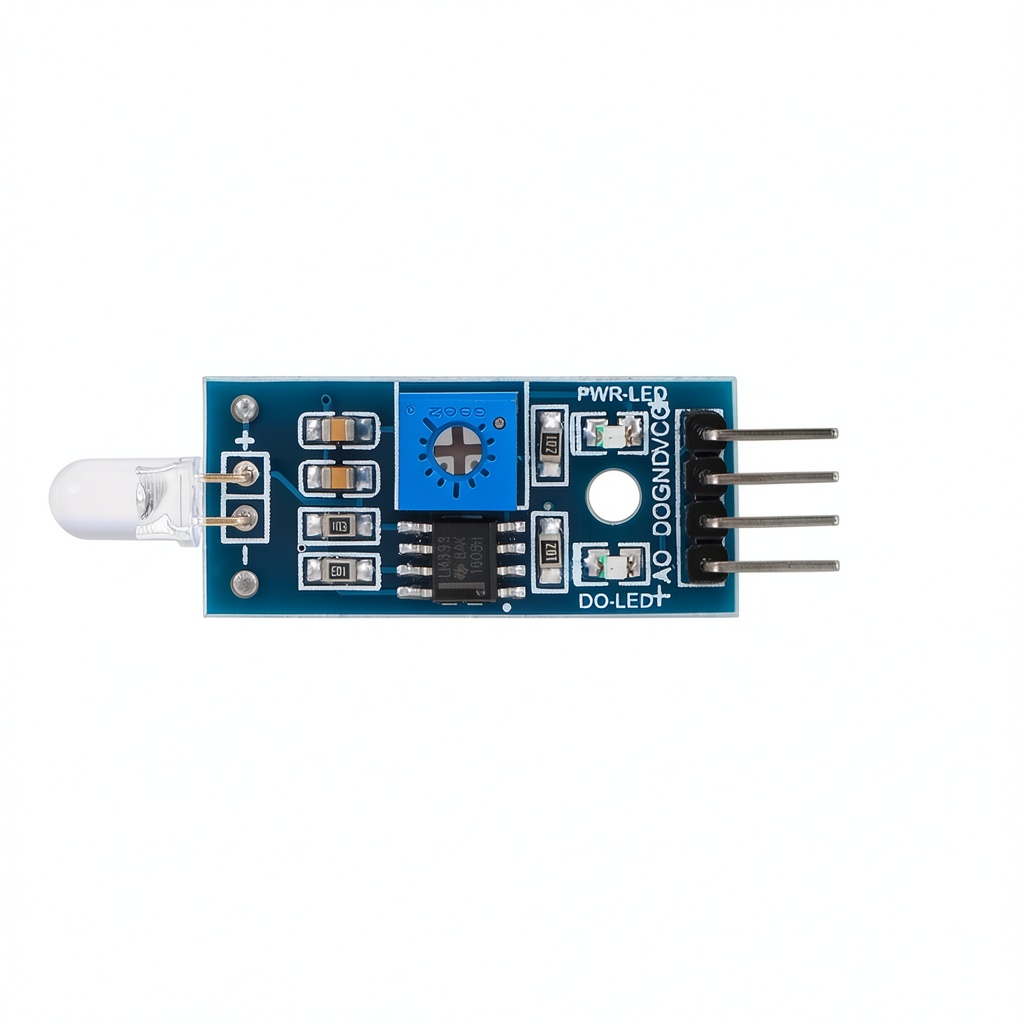
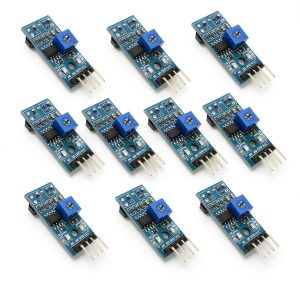
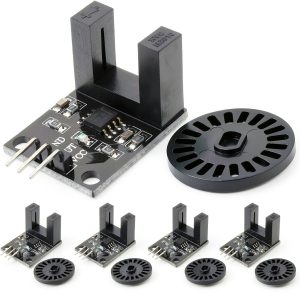
The uxcell Photosensitive Diode Sensor Module is engineered to provide reliable light detection across a broad range of environments. Featuring a high‑sensitivity photodiode paired with an LM393 comparator, the module delivers both digital (logic high/low) and analog voltage signals, giving designers flexibility in how they process light data. Its compact footprint—measuring just 5.51 x 3.98 x 0.63 inches—makes it easy to integrate into tight spaces, while the robust 3.3 V‑5 V operating range ensures compatibility with most microcontroller platforms, including Arduino, ESP32, and Raspberry Pi.
Designed for durability, the sensor housing is constructed from high‑quality polymer that resists moisture and dust, extending the module’s lifespan in automotive and industrial settings. The dual‑output architecture simplifies circuit design: the digital output can be directly read by a microcontroller pin for binary light‑on/off decisions, whereas the analog output provides a proportional voltage that can be fed into an ADC for nuanced intensity measurement. This versatility makes the module suitable for applications ranging from smart car headlamp control to ambient light sensing in home automation.
Usage
In automotive projects, the sensor can be mounted near the vehicle’s headlights or interior cabin to automatically adjust lighting based on ambient conditions. When the surrounding light level drops, the analog output rises, prompting the control unit to increase headlamp brightness or interior illumination, thereby enhancing driver safety and comfort. The digital output can also trigger warning indicators if light levels fall below a predefined threshold.
Beyond automotive uses, the module excels in DIY electronics, robotics, and IoT devices. Hobbyists often employ it in line‑following robots, where the sensor detects contrast between a dark line and a lighter background, enabling precise navigation. In smart home applications, the module can regulate LED strip brightness, control window blinds, or activate security lighting based on daylight levels. Its low power consumption and straightforward wiring make it an ideal choice for battery‑powered projects and remote sensor networks.
For industrial monitoring, the sensor can be integrated into conveyor systems to detect product presence or verify packaging integrity by sensing reflected light. Its fast response time ensures real‑time feedback, allowing control systems to adjust processes on the fly. The module’s 3‑pin header (VCC, GND, OUT) simplifies connection to PLCs and other industrial controllers, reducing installation time and minimizing wiring errors.
Why Choose Us
Choosing the uxcell Photosensitive Diode Sensor Module means selecting a product backed by rigorous quality control and a reputation for reliability. Each unit undergoes comprehensive testing to verify output accuracy, voltage tolerance, and environmental resilience. Our manufacturing process adheres to ISO‑9001 standards, ensuring consistent performance across batches.
We understand that technical support is crucial for successful integration. Our dedicated engineering team provides detailed datasheets, wiring diagrams, and example code snippets for popular development platforms. Should you encounter any issues, our responsive customer service offers prompt assistance, including troubleshooting guides and firmware updates when applicable.
Furthermore, the module is priced competitively at $7.19 per three‑piece pack, delivering exceptional value without compromising on performance. With a 4.6‑star rating from verified buyers, the product has demonstrated satisfaction across a diverse user base, from seasoned engineers to hobbyist makers.
Key Features
- Dual‑output design provides both digital logic and analog voltage for flexible integration.
- Wide operating voltage range (3.3 V‑5 V) ensures compatibility with most microcontrollers.
- Compact, moisture‑resistant housing fits easily into constrained spaces.
- Fast response time delivers real‑time light intensity data for dynamic applications.
- Comprehensive technical support and documentation included for hassle‑free implementation.
FAQ
What is the difference between the digital and analog outputs?
The digital output provides a binary signal (high or low) based on a preset light threshold, ideal for simple on/off control. The analog output delivers a proportional voltage that reflects the exact light intensity, allowing precise measurement and nuanced control.
Can the sensor be used with a 5 V Arduino board?
Yes, the module operates safely within a 3.3 V to 5 V range, making it fully compatible with standard Arduino boards, as well as other 5 V microcontroller platforms.
Is the sensor suitable for outdoor automotive applications?
The housing is made from a durable polymer that resists moisture and dust, making it suitable for most outdoor automotive environments. However, for extreme conditions, additional protective enclosures are recommended.
How many modules can I connect to a single microcontroller?
You can connect multiple modules to a single microcontroller as long as the total current draw stays within the board’s limits. Each module consumes minimal power, typically under 10 mA, allowing several sensors to be used simultaneously.
What is the recommended method for calibrating the analog output?
Calibration can be performed by reading the analog voltage at known light levels and mapping those values to your desired intensity scale using the microcontroller’s ADC. The provided datasheet includes example calibration curves to simplify this process.
Reviews
There are no reviews yet.